Many families believe one thing about their case: if you came into the United States without a visa, there is nothing anyone can do. Some heard it from a friend. Some heard it from a notario. Some just assumed it and never asked.
It is not always true. Entering without a visa makes a family case harder. It does not always make it impossible. This guide explains what the law allows, how the provisional waiver works, what happens at the consulate, and what one family’s path looked like.
1. The myth: you can never fix your status if you entered without a visa
Here is where the myth comes from. To get a green card from inside the United States, most people must show they were inspected and admitted or paroled when they came in. If you crossed the border without being inspected, you usually can’t finish your green card here, even if you are married to a U.S. citizen.
The truth: sometimes you can still fix it. There are two main ways.
The first is one of the few exceptions that allow you to get a green card from inside the U.S., even after entering without a visa. Some people are protected by an older law called Section 245(i) because a family petition or labor certification was filed for them, or for a parent or spouse, on or before April 30, 2001. Some family members of U.S. military members may qualify for parole in place. People with an approved VAWA self-petition or a U visa also have their own paths. These exceptions are narrow and must be proven with documents, not memory.
The second, and the most common, is to finish the green card at a U.S. consulate in your home country, with a waiver approved before you leave. That waiver is called the provisional waiver, and it is covered in the next section.
Some facts make this path much harder or close it. These include entering the U.S. more than once without a visa after a long stay here, a past deportation or removal order, an order from immigration court, or certain criminal records. The provisional waiver does not fix those problems. That is why we must review your full history before filing anything.
2. The provisional waiver: what it is and who it helps
If you spent time in the U.S. without legal status, leaving the country can trigger a bar to coming back. More than 180 days of unlawful presence, and then leaving, triggers a 3-year bar. One year or more, and then leaving, triggers a 10-year bar. For someone who entered without a visa and must go to a consulate for their green card, this used to mean a long, uncertain separation from family.
The provisional waiver, filed on Form I-601A, changes the order of steps. It lets you ask USCIS to forgive the unlawful presence while you are still in the United States. You leave for your consular interview only after USCIS approves the waiver, so the time away is usually much shorter and far less uncertain.
In general, the provisional waiver may help you if:
- You are physically in the United States and at least 17 years old
- You have an approved family petition, such as an I-130 filed by your U.S. citizen or green card holder spouse or parent
- Unlawful presence is the only problem in your immigration history
- You have a U.S. citizen or green card holder spouse or parent who would suffer extreme hardship if you were not allowed to return
A U.S. citizen child does not count as the qualifying relative for this waiver, even though the child’s life is part of the family’s story. You must show hardship for a spouse or parent.
Extreme hardship means more than the normal sadness of separation. You show it with proof: medical records, financial records, school and caregiving responsibilities, conditions in the home country, and letters from people who know the family. A waiver is only as strong as the evidence behind it.
An approved waiver is not a green card. It removes one obstacle. The consulate still makes the final decision at the interview.
3. Bringing your spouse from abroad: consular processing step by step
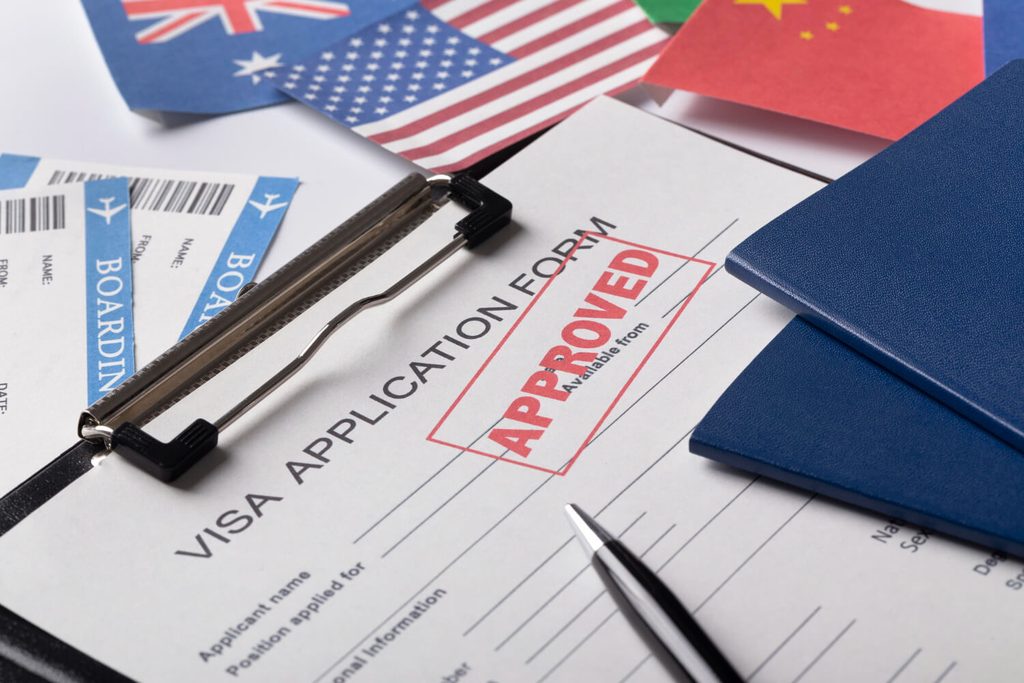
Consular processing is how a family member gets an immigrant visa at a U.S. embassy or consulate outside the United States. It is the path for spouses and relatives living abroad, and it is also the path for many people inside the U.S. who entered without a visa and use a provisional waiver.
Here is how the process moves, step by step:
- The petition is approved. The U.S. citizen or green card holder files Form I-130, and USCIS approves it.
- The case goes to the National Visa Center. The National Visa Center (NVC) creates a case and sends instructions to log in to the State Department’s online system.
- The immigrant visa fee is paid. At this stage, you pay only the immigrant visa application fee.
- If a provisional waiver is needed, it is filed now. The I-601A is filed after the immigrant visa fee is paid, and the case waits here until USCIS approves the waiver. Families who do not need a waiver move straight to the next step.
- The affidavit of support fee is paid. Pay this fee after the waiver is approved, or right away if no waiver is needed.
- The application and documents are submitted. The family member completes the online visa application (Form DS-260) and uploads civil documents such as a passport, birth certificate, marriage certificate, and police certificates. The petitioner submits the affidavit of support with tax returns and proof of income. If their income is not enough, a joint sponsor can help.
- The interview is scheduled. Once the file is complete, the NVC schedules an interview at the embassy or consulate.
- The medical exam is done. Before the interview, the family member sees a doctor approved by the embassy.
- The interview takes place. A consular officer reviews the case and asks questions about the relationship and the family member’s history.
- The visa is issued, and the family member travels. If approved, the immigrant visa is placed in the passport. After paying the USCIS immigrant fee, the family member enters the U.S., and USCIS mails the green card.
If the couple has been married for less than two years when the spouse enters, the green card is conditional and lasts two years. The couple then file together to remove the conditions.
Consular processing has also been less predictable in 2026. In January, the State Department paused immigrant visas for nationals of 75 countries. In August 2026, a federal court struck down that pause, and the State Department says it is no longer in effect. The government has appealed, and since the ruling, embassies and consulates worldwide have been rescheduling immigrant visa interviews, which the State Department says is for staff training. No end date has been announced. Rules and schedules are changing quickly, so talk with your attorney before you plan any travel or give up a scheduled interview.
4. A client story: she thought her case was impossible.
This story reflects the kind of case we handle. Names and identifying details have been left out, and some facts have been changed to protect privacy. Every case is different, and past results do not guarantee a similar outcome.
She came to the United States without a visa when she was young. Years later, she married a U.S. citizen. They built a home together and raised children here.
For years, she believed there was no way forward. Someone who was not a lawyer had told her that because she crossed the border without papers, she could never get a green card. She feared asking for help would put her at risk, so she didn’t.
When she finally came in for a free evaluation, the first step was not filling out forms. It was reviewing her full history. She had entered only once. She had never been deported or been in immigration court. She had no criminal record. That meant her only problem was unlawful presence, which is exactly what the provisional waiver is built for.
Her husband filed the family petition. After it was approved, she filed the provisional waiver. Her husband’s hardship was documented with his own medical and financial records, his role caring for family members here, and what it would mean for their children if she could not return. The waiver was approved while she was still at home with her family.
Only then did she travel to her country for the consular interview. She came back with an immigrant visa, and her green card arrived in the mail.
The lesson is not that every case turns out this way. It is that she almost never asked. The advice she had been given was wrong for her facts, and the only way to know that was to have an attorney review her full history before taking any step.
Final word
Entering without a visa is a serious fact in a family case, but it is not always the end of the story. The difference between a case that works and a case that goes wrong is often the order of the steps and whether anyone checked the full history before filing or travelling.
At Vital Legal Group, we start with your whole immigration history and tell you plainly which path is open and what the risks are. To get started, schedule your free case evaluation or call us at (317) 455-6829. You can also start with the chat on our website, which will ask a few quick questions about your situation and connect you with our intake team.
Attorney Advertising. This article is general information only and is not legal advice for any specific person. Reading it does not create an attorney-client relationship. Every case depends on its own facts.